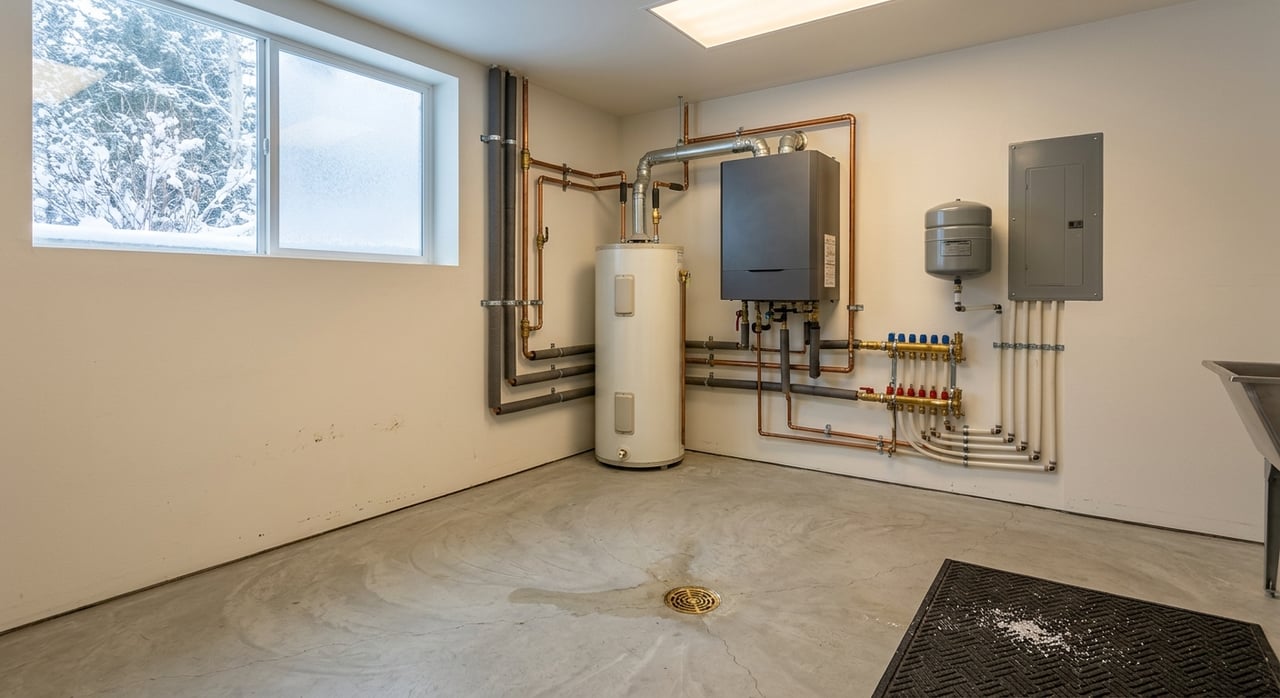
If you are buying a home in Fairbanks, the heating system is not a side detail. It can shape your comfort, monthly budget, maintenance needs, and even what questions you need to ask before closing. In a place where January’s mean temperature is -8.3°F and the area sees about 13,420 heating degree days each year, utilities deserve just as much attention as square footage or finishes. This guide will help you understand what to look for, what to ask, and how to compare homes more confidently. Let’s dive in.
Why utilities matter so much in Fairbanks
In many markets, buyers focus first on layout, updates, and curb appeal. In Fairbanks, those things still matter, but heating and utility setup often have a much bigger effect on day-to-day ownership.
A 2024 Alaska Center for Energy & Power survey found Fairbanks respondents most often reported heating oil, wood, natural gas, and electricity as home-heating methods. Because many homes use different systems or even multiple systems, two houses with similar prices can have very different operating costs and upkeep.
That is why buying in Fairbanks is often a utilities-first decision. Before you fall in love with a kitchen or a view, it helps to understand how the home stays warm and how the property is serviced through the winter.
Common heating systems in Fairbanks homes
Fuel oil systems
Fuel oil remains one of the most common heating methods in the Fairbanks area. If you are looking at an oil-heated home, the system itself deserves close attention.
Ask about the age and condition of the tank, whether the tank is owned or leased, and where it is located. It is also smart to ask for service records and delivery history, since winter reliability matters when heating demand is so high.
Natural gas systems
Natural gas is available in parts of the Fairbanks North Star Borough through Interior Gas Utility. But availability is not uniform, and gas service may not be on every street.
If a listing mentions natural gas or if you hope to convert a home later, confirm whether service is already available at that address. Interior Gas Utility notes that main-line extension decisions depend on budget, customer interest, and distance from existing mains, so conversion is not something you want to assume will be simple.
Electric heat and heat pumps
Electric questions in Fairbanks are directed to Golden Valley Electric Association. Its bill calculator shows a $22.50 customer charge plus usage-related charges, which means electric-heated homes can carry a noticeably different winter cost profile.
Some homes may also have heat pumps. The U.S. Department of Energy says heat pumps can work in all climates and that cold-climate models are designed to maintain capacity below 32°F, but in Fairbanks, you should treat a heat pump as a property-specific system that needs careful review rather than a one-size-fits-all replacement for a furnace or boiler.
Wood and pellet systems
Wood and pellet heating still matter in Fairbanks, but these systems come with tighter rules than many buyers expect. In the Fairbanks North Star Borough PM2.5 nonattainment area, approved wood stove, pellet stove, and pellet hydronic heater lists apply.
The Alaska Department of Environmental Conservation also states that there are no approved non-pellet hydronic heaters or coal-fired devices for that area, and some coal-fired heating devices or certain hydronic heaters must be removed or replaced before closing if they are present. That makes it important to ask not only whether a stove works, but whether it complies with current rules.
Air quality rules buyers should know
Fairbanks has a borough air-quality program for solid-fuel devices, and this can affect what a buyer is allowed to keep, replace, or use. If a home has a wood stove, pellet stove, or other solid-fuel appliance, you should ask for the model information, approval status, and chimney or vent maintenance records.
Fuel quality matters too. Within the nonattainment area, the Alaska Department of Environmental Conservation says only dry wood with 20% moisture content or less may be advertised, marketed, or sold.
For you as a buyer, the big takeaway is simple. A wood-burning setup should be evaluated as a regulated heating source, not just as a cozy feature.
Utility setups can vary by address
Heating is only part of the picture. Water, sewer, electric, gas, and even district heat options can vary sharply depending on where the property is located.
Inside the City of Fairbanks, city information directs sewer and water questions to Utility Services of Alaska, electric questions to Golden Valley Electric Association, district heat and steam to Aurora Energy LLC, and natural gas service to Interior Gas Utility. Propane is available through various vendors.
Across the borough, utility service is less uniform. Borough planning information notes that water and sewer service is generally limited to the city limits of Fairbanks and North Pole and nearby municipal service areas, while many other properties use a well or water holding tank along with a septic system.
That means two homes that appear similar online may come with very different maintenance routines and ownership responsibilities. One may have municipal water and sewer, while another may require you to manage a well, septic system, or holding tank setup.
Road service areas also affect ownership
Another detail buyers sometimes overlook is road maintenance. In the Fairbanks North Star Borough, service areas help fund specialized services such as road construction and maintenance, street lighting, water, sewer, and fire protection.
These service areas are voter-created geographic zones funded by additional taxes. For buyers, that means the level of road support and snow-related maintenance can vary by property.
If you are relocating from outside Alaska, this is especially important. Winter access is a practical part of how a home lives, so it is worth asking which road service area applies and what that means for maintenance.
Questions to ask during showings
When you tour homes in Fairbanks, bring a utilities checklist with you. A few clear questions can reveal a lot about future costs and responsibilities.
Ask about the heating system
- What is the primary heat source?
- Is there a backup heat source?
- When were the furnace, boiler, or auxiliary systems last serviced?
- Are service records available?
Ask oil-heat questions
- How old is the oil tank?
- Is the tank owned or leased?
- Where is the tank located?
- Is there delivery history or maintenance documentation?
Ask gas-service questions
- Is natural gas already available at the property?
- Is gas service available on the street?
- Would any future extension be needed?
Ask solid-fuel compliance questions
- What is the model of the wood or pellet appliance?
- Is it on the approved list for the area?
- Are chimney or venting maintenance records available?
- Does anything need to be removed or replaced before closing?
Ask about water, sewer, and access
- Is the home on municipal water and sewer?
- Does it use a well, septic system, or holding tank?
- Which road service area applies?
- What kind of road maintenance and winter access support is provided?
How to compare homes more confidently
When you compare properties in Fairbanks, try not to look at purchase price alone. A home with a lower list price may have a utility setup that creates higher ongoing costs or more hands-on maintenance.
A better approach is to compare homes across a few practical categories:
| Category | What to Compare |
|---|---|
| Heat source | Oil, gas, electric, wood, pellet, or a combination |
| Backup heat | Whether a second heating method is available |
| Utility type | Municipal water/sewer or well, septic, or holding tank |
| Compliance | Approval status of any solid-fuel device |
| Access | Road service area and winter maintenance |
| Records | Service history for tanks, boilers, furnaces, and vents |
This kind of side-by-side review can help you see beyond staging and focus on how the home may perform through a Fairbanks winter.
Budgeting tools that can help
Local tools can help you build a more realistic monthly budget before you buy. Golden Valley Electric Association offers a bill calculator that shows both the fixed customer charge and usage-related charges.
Interior Gas Utility also offers a service map and an energy cost calculator, which can help when you are evaluating natural-gas availability and related costs. At the state and borough level, Alaska’s Heating Assistance Program, the Fairbanks North Star Borough Energy Burden Estimator, and the Alaska Housing Finance Corporation fuel survey can also provide useful context when you compare heating expenses.
These tools will not replace property-specific due diligence, but they can help you ask better questions and plan with fewer surprises.
If you are buying in Fairbanks, the goal is not to find a perfect system. It is to understand the system the home has, the responsibilities that come with it, and how that fits your budget and lifestyle. That kind of clarity can make your decision feel much more confident, especially if you are moving from out of state or buying your first home in Interior Alaska.
When you want practical guidance on how a home really functions in Fairbanks, Danny Larranaga can help you compare properties with local insight and steady support.
FAQs
What heating system is most common in Fairbanks homes?
- A 2024 Alaska Center for Energy & Power survey found Fairbanks respondents most often reported heating oil, followed by wood, natural gas, and electricity, with some households using more than one method.
What should buyers ask about an oil-heated home in Fairbanks?
- Ask about the oil tank’s age, condition, ownership, location, service history, and delivery records, since those details can affect reliability and operating costs.
Can every Fairbanks home connect to natural gas?
- No. Interior Gas Utility serves the Fairbanks North Star Borough, but gas is not available on every street, and extension decisions depend on budget, customer interest, and distance from existing mains.
Do wood stoves in Fairbanks have special rules?
- Yes. In the Fairbanks North Star Borough PM2.5 nonattainment area, approved-device lists apply, and some coal-fired devices or certain hydronic heaters must be removed or replaced before closing.
Are water and sewer service the same across the Fairbanks area?
- No. Water and sewer are generally limited to Fairbanks, North Pole, and nearby municipal service areas, while many other properties use a well, septic system, or holding tank setup.
Why should Fairbanks buyers ask about road service areas?
- Road maintenance and related services can vary by service area, and those areas are funded through additional taxes for specialized services such as roads, lighting, water, sewer, and fire protection.