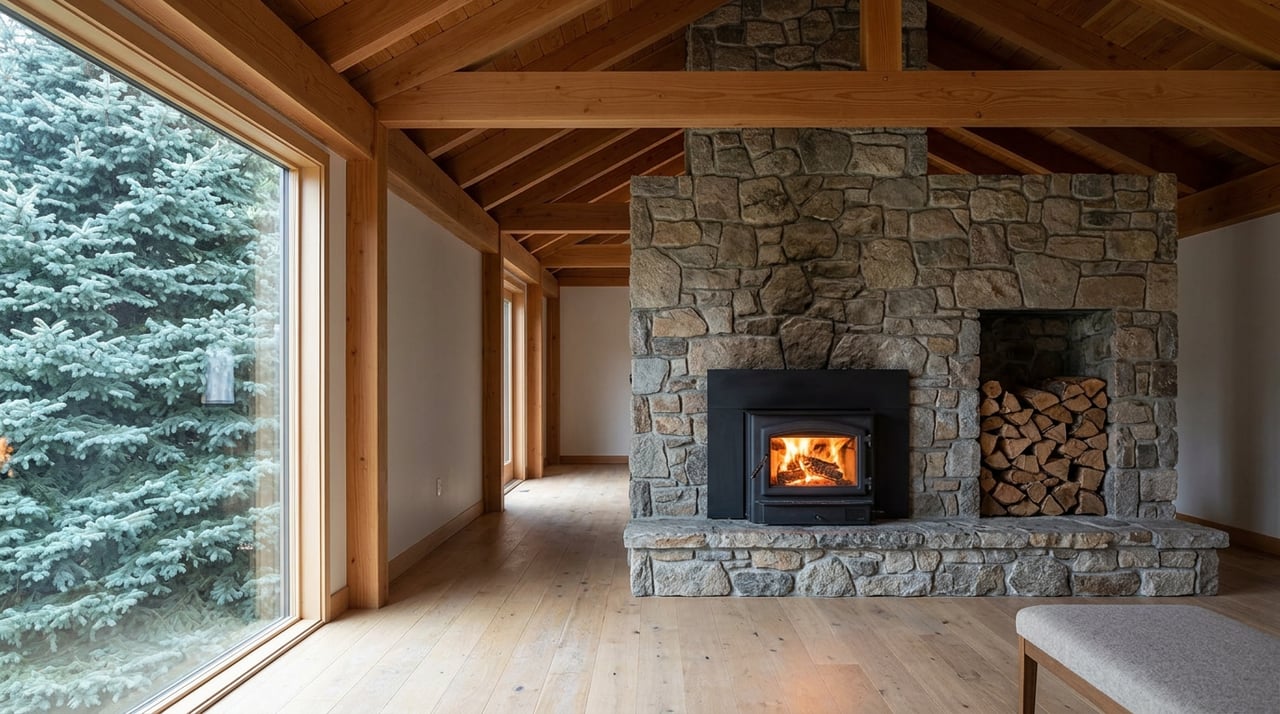
The News-Miner reported that Angie Tallant, owner of Somers Sotheby's International Realty in Fairbanks, described a state air quality rule at a Greater Fairbanks Chamber of Commerce luncheon in early 2025, saying, "It's a back door change that didn't require legislative action to approve." At the time, the rule in question was still scheduled to reshape every home sale in the nonattainment area.
For the better part of a year, Fairbanks-area real estate had a date circled on the calendar: December 31, 2025, the deadline the Alaska Department of Environmental Conservation set for every seller inside the Fairbanks North Star Borough's air quality nonattainment area to hire a certified energy rater and get a home energy rating before the property could even be listed. That date came and went. The listing-audit requirement never took effect. If you read a 2025 article about it and moved on, you may still believe you'll need an audit to sell your house. You won't.
The energy audit requirement has been repealed, but it was never the only rule on the table. A separate, older set of regulations about wood stoves and how they leave a property before closing is still fully in force, and it is not going anywhere. Knowing which rule died and which one didn't is the difference between a seller who breezes through closing and one who finds out about an old barrel stove in the basement three weeks before the deal is supposed to fund.
The Rule That Was Supposed to Start on December 31, 2025
The energy rating requirement came out of Alaska's long-running effort to get its Fairbanks air quality plan approved by the EPA. The state's Serious Implementation Plan, or SIP, had been partially rejected in 2023 for missing weatherization measures, and the energy audit rule, formally 18 AAC 50.081, was the state's answer. It was adopted on November 4, 2024, signed days later, and went into effect on December 8, 2024, with the listing-audit piece phased in a year out.
The Greater Fairbanks Board of Realtors pushed back hard almost immediately, pointing out that the borough had only two certified energy raters at the time capable of doing the work, a number that had grown to four by late 2025 according to the Alaska Housing Finance Corporation. The board called mandating energy ratings as part of real estate transactions an overreach, arguing it would slow sales and add cost without doing much for air quality.
The turning point came from Washington. In September 2025, the EPA reversed its earlier position and told the state the audit requirement wasn't actually necessary to satisfy the Clean Air Act. Alaska's Department of Environmental Conservation moved fast: it proposed a formal repeal on October 8, 2025, took public comment through mid-November, and by early November the EPA had signed off on a revised state plan that dropped the audit requirement entirely. DEC finished the job in December 2025, formally pulling the rule out of Alaska's administrative code.
The practical result as of today: nobody selling a house in the Fairbanks or North Pole nonattainment area needs to commission an energy rating before listing. That cost, and that bottleneck, is off the table.
Older Wood-Stove Rules at Closing
The audit requirement was the newest and most publicized part of the air quality rules affecting real estate, but its repeal did not end the story. The regulations that actually govern wood stoves at closing predate the audit fight by years, and DEC's own current guidance on real estate transactions in the nonattainment area still describes them as active, with no repeal notice attached.
Under 18 AAC 50.077, in effect since 2017, and 18 AAC 50.079, covering coal-fired devices since 2018, a solid fuel heating device that is 25 years old or older and has an emission rating above 2.0 grams per hour has to be removed, replaced, or rendered inoperable before a property sale closes. Non-pellet hydronic heaters and most coal-fired devices are treated more strictly still: they have to come out regardless of age, with no waiver, and once removed they can't be reinstalled anywhere in the nonattainment area.
Checking compliance isn't guesswork. EPA-certified wood and pellet stoves carry a permanent label, usually on the back of the unit, listing the emission rating. No label generally means it isn't certified. If a stove came from the Fairbanks North Star Borough's own Change-Out Program, it's presumed to be EPA-certified and under 25 years old, which typically means it clears the bar without further action.
None of this requires an appraiser or a state inspector to show up. It's a document-and-verify problem that belongs on a seller's pre-listing checklist, not something that surfaces for the first time at the closing table if someone checks early.
| What changed | Status as of September 2026 |
|---|---|
| Energy rating required before listing | Repealed. EPA approved a revised state plan without it in November 2025; DEC pulled it from administrative code in December 2025. |
| Removal or replacement of noncompliant wood, pellet, or coal devices before closing | Still required under 18 AAC 50.077 and 50.079, in place since 2017 and 2018. |
| Non-pellet hydronic heaters and coal-fired devices | These heaters and most coal-fired devices still must be removed regardless of age, no waiver, no reinstallation. |
What This Actually Costs a Seller
With the audit gone, the remaining cost sits with the stove itself, not with paperwork. A homeowner facing a noncompliant device has options that existed before the audit fight ever started. The borough's Air Quality Improvement Program offers rebates in the range of $4,000 to $14,000 for property owners who replace an old wood-burning appliance with an EPA-certified stove, a pellet appliance, natural gas, propane, or another eligible heat source, according to For Green Heat. That rebate has been available since before the audit rule existed and continues regardless of the December 2025 repeal.
Where this catches sellers off guard isn't the existence of the rule. It's the timing. A seller who assumes the whole air quality conversation ended when the audit got repealed may not think to check their stove's certification label until an inspection or a buyer's own research turns it up mid-contract. Handling it before the house goes on the market, when there's time to apply for a rebate or schedule a swap, is a very different experience than handling it during a thirty-day close.
Why One Rule Survived and the Other Didn't
The distinction matters because it tells you something about how durable each rule is likely to be. The energy audit was added in 2024 specifically to check a federal compliance box after the EPA's 2023 partial rejection of the state's plan. DEC's own air quality manager, Nick Czarnecki, said as much when the repeal was proposed: the audit wasn't going to produce meaningful emission reductions, it was included to get an approvable plan. Once the EPA changed its position on what the plan actually needed, the audit had no independent reason to survive.
The stove removal rules are a different kind of regulation. They target the pollutant directly. Czarnecki also told local media that wood stoves account for somewhere between 60 and 90 percent of air pollution in the North Pole area and 40 to 60 percent in Fairbanks, depending on conditions. A rule aimed at the largest single source of the borough's particulate problem isn't administrative overhead the way a real estate audit is. It's load-bearing for the state's stated goal of reaching attainment by 2027, which is why it wasn't part of the repeal conversation at all.
For a seller, that's the useful takeaway. Rules that exist to satisfy a federal paperwork requirement can disappear as fast as the politics around them change, the way the audit did in about fourteen months. Rules that exist because they address the actual pollution source tend to stick around regardless of who's in the EPA administrator's office. Plan around the second kind. Don't spend energy worrying about the first kind coming back in some new form, because there's no indication anyone's trying to bring it back.
A Short FAQ
Do I need to hire an energy rater before listing my Fairbanks-area house? No. That requirement was repealed by the Alaska Department of Environmental Conservation in December 2025 after the EPA approved a revised air quality plan without it.
Does the wood stove rule apply to my property specifically? It applies inside the Fairbanks North Star Borough's PM2.5 nonattainment area, which covers the greater Fairbanks area, Farmers Loop, Badger Road, and North Pole, with its western edge reaching toward Ester, Goldstream Valley, and part of Fox. If you're unsure whether your address falls inside the boundary, that's worth confirming before you list.
How do I know if my stove is compliant? Look for a permanent label, usually on the back of the unit, that lists EPA certification and an emission rating. No label generally means it isn't certified and may need to be addressed before closing.
What if I inherited an old device from the borough's Change-Out Program? Those are generally presumed EPA-certified and under 25 years old, which typically satisfies the requirement without further steps, though it's still worth checking the label.
If you're weighing a sale in Fairbanks, North Pole, or anywhere in the Interior and want to know exactly where your specific property stands on rules like this before you list, Daniel Larranaga can walk through it with you. Schedule a free consultation and get a straight answer before the calendar makes the decision for you.
This article is general information, not legal, tax or financial advice. Consult a qualified professional about your situation.